
Agile staffing isn’t how fast you can fill roles, it’s how deliberately you do it.
By Tracy Judge, Founder & CEO, Soundings
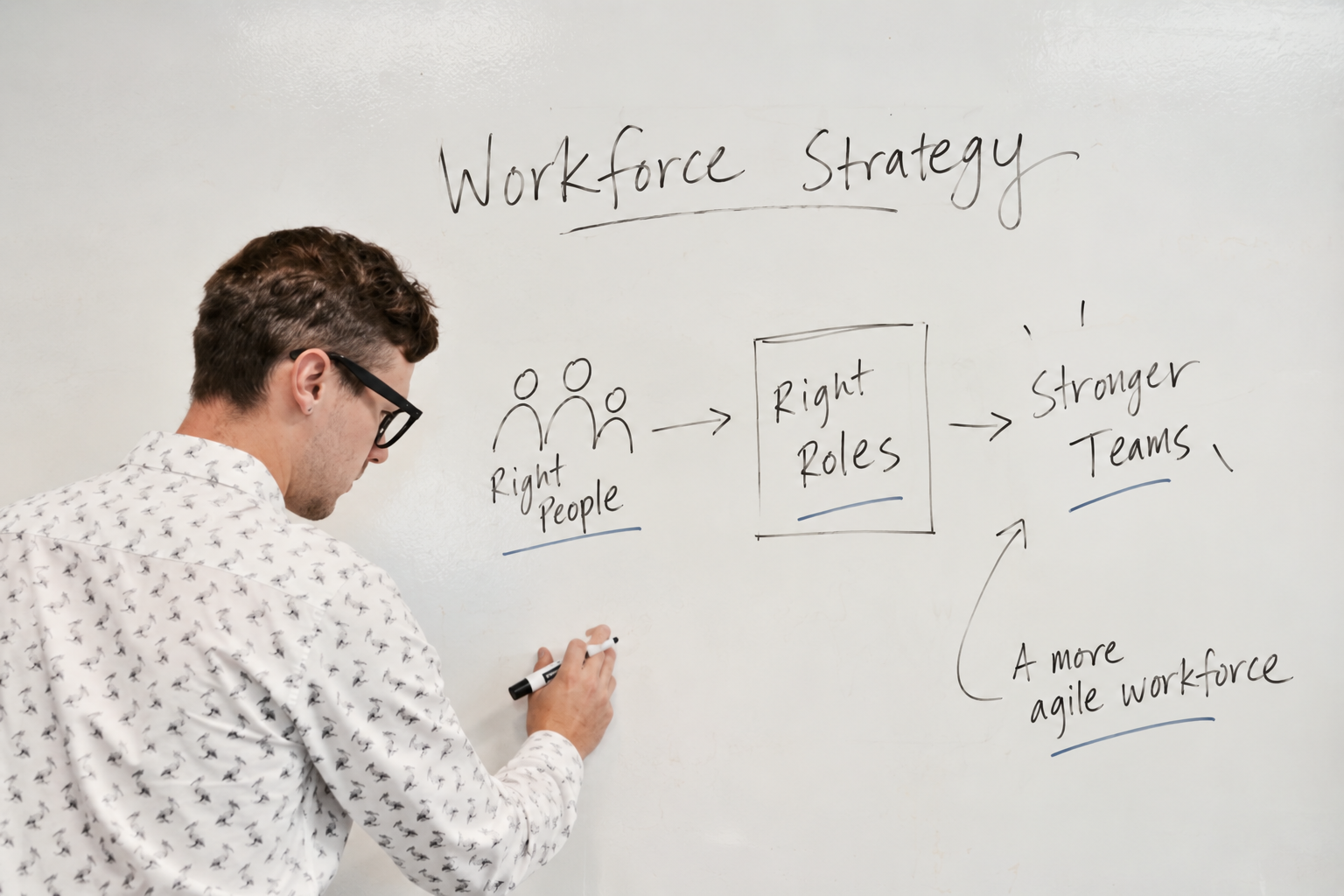
I've spent enough years in the meetings and events industry to know one thing without hesitation: people make or break the plan. Not the platform, not the budget, not the timeline. The people executing it.
That sounds obvious until you look at how most organizations actually staff up. They wait until they're understaffed, post a role, wait weeks to fill it, and hope the person they hire is as good on the job as they were in the interview. That's not a talent strategy. That's damage control.
The Real Advantage Is Access, Not Headcount
I founded Soundings because I kept watching organizations treat flexible talent as a last resort instead of a first move. On-demand staffing, contract augmentation, full-time placements, recruiting. Most companies think of these as four different problems. I think of them as four settings on the same dial, and the organizations that win are the ones who know which setting they need before they're in crisis mode.
Need to cover parental leave without disrupting a team? That's augmentation. Scaling a specialized skill set for one program? That's on-demand. Found someone through contract work who's clearly full-time material? Convert them. The strategy isn't picking one lane. It's knowing you have all four available and using the right one at the right moment.
Compliance Isn't a Footnote
Here's what doesn't get talked about enough: an increasing number of businesses are unknowingly misclassifying contract and freelance workers, and the ramifications include real litigation and settlement costs. I've built compliance into how Soundings operates because I've seen what happens when companies treat worker classification as an afterthought instead of a legal obligation. Labor laws around freelance and contract work keep changing. If your staffing partner isn't actively tracking that, you're carrying risk you probably don't know you have.
Diversity of Thought Is a Business Input, Not a Value Statement
I don't think of diversity as a values exercise. I think of it as an input, because the data backs that up. Companies with higher-than-average diversity see a 19% increase in innovation revenue, largely because they're equipped to market a wider range of products, according to HBR. Ethnically diverse teams see productivity gains of 35%, per McKinsey, with gender-diverse teams close behind at 15%.
When I built Soundings' talent network, I wasn't optimizing for a headline. I was optimizing for the outcome those numbers describe: teams that think differently because the people on them come from different backgrounds, industries, and lived experience. That's not a nice-to-have next to the business case. It is the business case.
Matching Is the Hard Part, Not the Sourcing
Anyone can hand you a stack of resumes. What I've learned is that speed without fit just moves the problem downstream. So the process I built runs deeper than most: consult first, so we actually understand what a role requires before we go looking. Source from a vetted community instead of a cold database. Then select based on expertise, soft skills, and whether someone actually wants to grow in the direction the role demands, not just whether they're available.
That last part matters more than people expect. A candidate's intent to grow tells you almost as much about long-term fit as their resume does.
What This Looks Like When It Works
I'd rather let a client say this than say it myself: "We consider Soundings Connect an extension of our team and a valued business partner." That's the sentence I want every client to be able to say, because it means the staffing stopped feeling like staffing and started feeling like a partnership.
Agile workforce strategy isn't a buzzword to me. It's the difference between reacting to a headcount gap and building a talent bench you can draw from before you're desperate. If you're rethinking how your organization approaches flexible talent, I'd love to hear where you're stuck.